
Analysis
Part 1: Walk-Through Analysis of Dhamma
In this section, we analyze to clearly understand the principle of the arising of greed (lobha), sensual lust (kāmarāga), delight-lust (nandirāga), and craving (taṇhā), which leads to rebirth – the causal link to aging, death, sorrow, lamentation, pain, grief, and despair.
As introduced in the XGM framework, the journey of any phenomenon (Dhamma) from penetration to cessation consists of 10 fundamental points:
The three phases of Dhamma processing
Reception
Phase I
(1 - 4)
Reaction
Phase II
(5 - 7)
Relinquishment
Phase III
(8 - 10)
Phase I: 1.Bodily Need -> 2.Attention -> 3.Contact -> 4.Feeling
The Reception Phase (1–4):
- Starting with desire (chanda), external (physical) information is received by the sense organs (physiological) and is attended to, felt, and perceived (psychological). When attention is directed toward the objects of the five sense faculties, due to psychological tendencies, greed (lobha) easily arises toward objects that are agreeable, pleasant, charming, delightful, connected with sensual desire, stimulating, or attractive. Upon experiencing feeling, conscious awareness demands pleasant feeling, giving rise to sensual lust (kāmarāga) and delight-lust (nandirāga).
- When satisfied multiple times, it generates a mind of attachment that frequently dwells on sensual pleasures; this is called craving (taṇhā). We need to clearly understand that bodily needs for external objects—such as eating when hungry, drinking when thirsty, and resting or sleeping when tired—are normal desires (chanda). Only when we perceive, imagine, and give rise to greed (lobha) toward these objects does it become sensual desire (kāmacchanda), generating the mind of sensual lust (kāmarāga) and delight-lust (nandirāga). When this habit is repeated many times, it gives rise to craving (icchā taṇhā), which acts as the moisture for the seed of consciousness to sprout on the field of karma (the three realms). It is precisely craving, conjoined with sensual lust (kāmarāga) and delight-lust (nandirāga), that drives consciousness to seek here and there; creating karmic consciousness during life, and leading to rebirth through remembrance at the moment of death to partake in its karmic fruits.
Phase II: 5.Concentration -> 6.Mindfulness -> 7.Wisdom (direct knowledge)
The Reacting Phase (5–7):
- With the knowledge of experiences accumulated over many lifetimes, thoughts weave a multicolored picture. Therefore, right at the stage of perception (saññā), arising phenomena (dhammas) need to be identified; then, with ardency, situational awareness, and mindfulness, one observes dhammas arising just as they are.
Phase III: 8.Liberation -> 9.Cessation of Rebirth -> 10.Nirvana
The Relinquishing Phase (8–10):
- When phenomena (dhammas) are fully understood through wisdom (paññā) as impermanent, suffering, and devoid of self-essence, we no longer harbor greed (lobha), sensual lust (kāmarāga), delight-lust (nandirāga), and craving (icchā taṇhā) for any phenomenon (dhamma) in the world. Because there is no more craving, there is no more birth; because there is no more birth, there is no more aging and death. Without aging and death, the mind does not waver, feels no anger, harbors no fear, leading to the end of all longing. When all phenomena are stilled and mental proliferations have no movement, our mind becomes completely empty and tranquil—the True Foundation, which is Nirvana.
Part 2: Analysis Of The Formation And Operation Of Consciousness
- Consciousness contains the entirety of experience and learning accumulated from the past to the present. It is through this faculty that we are aware of emotions, feelings, perceptions, and thoughts.
The five group of Dhammas
Form
Rūpa
Feeling
Vedanā
Perception
Saññā
Volition
Saṅkhāra
Consciousness
Viññāṇa
The process of the volition and operation of consciousness is divided into five groups of Dhammas:
- The Form (Rūpa-dhamma): Conditioned by the eye base and visual objects, eye-consciousness arises; the phenomena (dhammas) recognized by eye-consciousness are known as the dhamma of form. Conditioned by the ear and sounds… the nose and odors… the tongue and tastes… the body and tactile sensations, body-consciousness arises; the dhammas recognized by body-consciousness are called the Form aggregate.
- Feeling (Vedanā-dhamma): The mind base (Manas) is the meeting point where feelings (pleasant, painful, or neutral) toward the objects and realms of the five senses converge. Conditioned by the mind base and the Phenomenon of Form, mind-consciousness arises; the phenomena recognized by mind-consciousness are known as the Feeling aggregate.
- Perception (Saññā-dhamma): Because feeling is present, perception is present. Perception is the synthesis of signals received from the sense organs to identify and label the object.
- Volitional Formations (Saṅkhāra-dhamma): Because consciousness is tainted by mental fermentations (Āsavas), it fails to recognize the true nature of all phenomena—which is impermanent, suffering, and non-self. This gives rise to thoughts, creating a stream of thinking that weaves together mental proliferations. Here, consciousness divides itself into a “Self” and “Proliferated Concepts.” This “Self” joyfully welcomes and clings to these delusions, triggering underlying tendencies (Anusaya): sensual desire, aversion, wrong view, doubt, conceit, craving for existence, and ignorance. This leads to unwholesome actions (Kamma) of body or speech.
- Consciousness (Viññāṇa-dhamma): At the moment of thinking and initiating intention, every thought, word, and action becomes Kamma (the “Field”). These are recorded, shaping the consciousness. When the “Moisture of Craving” is present, it provides the condition for the “Seed of Consciousness”—accumulated over many lifetimes—to sprout and grow in the field toward which the consciousness is directed.
In this process, Volitional Formations play the role of manifesting Consciousness within Form, Feeling, and Perception through the process of thinking, imagining, and weaving mental proliferations. This process divides consciousness into an “I” and “Deluded Objects.” (duality). This “I” then adopts the following deluded concepts: “This body, this feeling, this perception, these thoughts, and this consciousness are mine, are I, are my self.”
Part 3: Essential Points
Wherever consciousness finds a footing and becomes established through grasping, there lies the nourishment for its existence and operation.
Form
5 sense objects
foods of 5 bases
Feeling
6 sensory contacts
foods of contact
Perception
3 type feelings
foods of contact
Volition
6 type percept.
foods of volition
Consciousness
Kammic forces
foods of consciousness
New There are four stations where consciousness grasps and establishes itself (Expand for details):
- The Form (Rūpa-dhamma): Where the five sense faculties (eye, ear, nose, tongue, body) have desires for the five sense objects (form, sound, odor, taste, and touch) and give rise to sensual desire (kāmacchanda). This is the source of nourishment for consciousness; it arises at the stage where the five faculties condition the five sense objects to generate the five sense consciousnesses. Because the phenomena of form are recognized distinctly by the consciousness of each of these five faculties, it is called Nutriment of Physical Food (kabaḷīkārāhāra). Note: Daily edible food belongs to the gross, common form of matter, while other objects like sound, odor, taste, and touch belong to the subtle form of matter, which also serve as sources of nourishment for consciousness.
- The Feeling (Vedanā-dhamma): Conditioned by the mind base and the Phenomenon of Form, mind-consciousness arises. Regarding the phenomena recognized by mind-consciousness, the mind gives rise to sensual lust (kāmarāga) toward the Phenomenon of Feeling. This is the source of nourishment for consciousness; it arises at the stage of Contact, and is therefore called Nutriment of Contact (phassāhāra).
- The Perception (Saññā-dhamma): Because the phenomenon of feeling is present, the phenomenon of perception is present. The phenomenon of perception is the synthesis of signals received from the sense organs to recognize an object. Upon recognizing the object, the mind gives rise to delight-lust (nandirāga) toward the Phenomenon of Perception. This is the source of nourishment for consciousness; it also arises at the stage of Contact, and is therefore called Nutriment of Contact (phassāhāra).
- The Volitional Formations (Saṅkhāra-dhamma): Because mind-consciousness has been defiled by taints (āsavas), it fails to realize the true nature of all phenomena as Impermanence (Anicca), Suffering (Dukkha), and Non-self (Anattā). From there, thoughts arise, shaping the flow of mental processing and weaving illusory concepts of mental proliferation. This becomes the object for forming decisions and volitional actions through body, speech, and mind to generate karma, which is then registered into conscious awareness. This is the source of nourishment for consciousness; it arises during the process of thinking and forming volition, and is therefore called Nutriment of Mental Volition (manosañcetanāhāra).
- The Consciousness (Viññāṇa-dhamma): At the very moment thoughts and intentions arise, every thought, word, and action forms the field of karma (kamma) and is recorded, shaping mind-consciousness (viññāṇa). When the moisture of craving (taṇhā) is present, it acts as a condition for the seeds of consciousness—accumulated over many lifetimes—to sprout and grow at the right time upon the field of karma that consciousness clings to (upādāna) and inclines toward. This is the source of nourishment for consciousness; it arises during the process of rebirth, and is therefore called Nutriment of Consciousness (viññāṇāhāra).
Note: Due to attachment to the Form (rūpa-dhamma), Feeling (vedanā-dhamma), Perception (saññā-dhamma), and Volitional Formations (saṅkhāra-dhamma), consciousness (viññāṇa) gains a ‘footing,’ becomes established, seeks delight-lust (nandirāga), and proceeds to grow, increase, and expand.
However, if delight and greed toward these stations of consciousness are abandoned, consciousness is left without a support and no longer has a place to land. Without a support, consciousness does not ‘become’ (develop), does not construct, and is liberated. Being liberated, it is steady; being steady, it is content; being content, it is not agitated or fearful; being unagitated, one personally realizes Nirvana (nibbāna).
When the mind is liberated from the grip of the aggregates, what remains is only the Pure Knowing—clear, radiant, malleable, wieldy, and brilliant—this is the Luminous Mind (pabhassara-citta). Wisdom (paññā) is the knowing of the Luminous Mind. Intellect/Knowledge (viññāṇa) is the knowing of a mind clouded by delight and greed. Both share the same foundation of the ever-pure, radiant Luminous Mind. Among these:
- Wisdom is that which is to be developed (bhāvetabba).
- Consciousness (Intellect) is that which is to be fully understood (pariññeyya).
Part 4: Approaching Method
As such, consciousness (viññāṇa) stands established by taking form, feeling, perception, and volitional formations as its support; and if nourished by delight and lust (nandirāga), it comes to growth, increase, and abundance. If one abandons desire for form, lust for feeling, delight and lust for perception, and craving for volitional formations, then consciousness is left without an object or support for clinging, and it no longer grows. Thereby, being unconditioned (asaṅkhata), the mind is liberated (vimutta).
- Through liberation, it is steady (ṭhita);
- Through steadiness, it is content (santuṣita);
- Through contentment, it is not agitated (anuttasana);
- Being unagitated, one personally attains Nibbāna (parinibbāyati).
Therefore, one must fully understand consciousness at the point of contact where form, feeling, perception, and volitional formations arise. This means utilizing the “knowing” of the mind to contemplate the coming, going, arising, passing away, growth, increase, and abundance of consciousness upon form, feeling, perception, and volitional formations. The manifestation of consciousness upon these four categories constitutes the four areas where mindfulness (sati) is established, namely the Four Establishments of Mindfulness: Body, Feelings, Mind, and Dhammas.
Form
Mindfulness
of the Body
Kāyā anupassanā
Feeling
Mindfulness
of the Feeling
Vedanā anupassanā
Perception
Mindfulness
of the Feeling
Vedanā anupassanā
Volition
Mindfulness
of the Mind
Cittā anupassanā
Consciousness
Mindfulness
of the Dhamma
Dhammā anupassanā
Form (rūpa-dhamma): The sense faculties (indriya) come into contact with external sense objects, serving as a condition for consciousness to arise; the practitioner accordingly establishes the contemplation of the body in the aspect of the body (kāyānupassanā).
Feeling and Perception (vedanā-dhamma and saññā-dhamma): The objects of the five senses reflect upon the mind faculty (manindriya), from which feelings (pleasant, painful, or neither-painful-nor-pleasant) and perceptions are registered; the practitioner practices the contemplation of feelings in the aspect of the feelings (vedanānupassanā).
Volitional Formations (saṅkhāra-dhamma): At the moment feeling and perception are present, due to ignorance, the mind rejoices in and welcomes these phenomena (name – form). It then gives rise to greed and delight toward them, creating a stream of thoughts that spins out conceptual proliferations (papañca). The mind then grasps onto these very projections (the mind grasping its own state), thereby generating defilements (greed, hatred, and delusion). Practicing the contemplation of the mind in the aspect of the mind (cittānupassanā) liberates the mind from these very defilements of greed, hatred, and delusion.
Consciousness (viññāṇa-dhamma): When the mind-consciousness manifests the objects, because the mind is detached from defilements, one then practices the contemplation of phenomena in the aspect of the phenomena (dhammānupassanā). One lives dwelling ardently (ātāpī), fully aware (sampajāna), and mindful (sato), subduing greed and grief regarding the world (vineyya loke abhijjhādomanassaṃ).
The sense faculties contacting external objects trigger the arising of consciousness—this is the primary awareness. This is followed by feeling, perception, and volitional formations (thoughts and ideation), which then breed taints (āsavas) and accumulate kamma, leading to the suffering of the round of rebirths (saṃsāra). Therefore, using the “knowing” of the mind to observe the coming, going, arising, and passing away of form is synonymous with practicing mindfulness of the body in the body.
If we observe completely without initiating discursive thought or personal will based on the ego, that “knowing” is wisdom (paññā), which needs to be developed (bhāvanā) and cultivated. In cases where consciousness arises within feelings, perceptions, or volitional formations, we clearly comprehend the phenomenon as it truly is (yathābhūta). Immediately after, we ardently maintain mindfulness of inhalation and mindfulness of exhalation to anchor the mind back to the body, maintaining full awareness and mindfulness during the cultivation and growth of wisdom. One of the simplest, most accessible methods that requires little investment yet yields great fruits and great benefits is the practice of mindfulness of in-breathing and out-breathing (ānāpānasati), which will be presented and explained in the Action page .
Part 5: applied analysis
As established, consciousness finds a footing and becomes established through attachment to Form, Feeling, Perception, and Volitional Formations. If delight and greed toward these stations are abandoned, consciousness is left without a support or a place to land. Without a support, consciousness does not “become,” does not construct, and is liberated. Being liberated, it is steady; Being steady, it is content; Being content, it is not agitated (not fearful); Being unagitated, one personally realizes Nirvana.
To abandon delight and greed toward consciousness, one must cultivate Wisdom (Paññā) through the practice of Virtue (Sīla), Concentration or Focus (Samādhi), and Wisdom (Paññā):
Virtue
Sīla
Concentration
Samādhi
Wisdom
Paññā
I. Virtue (Sīla): This is the foundation, the dwelling place, and the support that allows all other spiritual qualities to grow, develop, and reach fulfillment.
II. Focus/ Concentration (Samādhi): There are four developments of concentration. What are the four? There is the development of concentration that, when cultivated and practiced frequently, leads to:
- A Pleasant Dwelling in the Present Moment: The practitioner attains the four stages of fine-material Jhana.
- The Attainment of Knowledge and Vision: The practitioner directs the mind toward the perception of light—day and night as one—with an open, unclouded mind, developing a radiant mind.
- Mindfulness and Clear Comprehension: The practitioner clearly knows the arising, presence, and cessation of feelings, perceptions, and thoughts (vitakka).
- The Destruction of the Fermentations: The practitioner dwells contemplating the arising and passing away of the Five Clinging Aggregates (Pañca Upādānakkhandhā).
In the content shared on this page, we focus on the development of concentration leading to the destruction of the fermentations. This meditative path encompasses both serenity (samatha) and insight (vipassanā). By cultivating and practicing this path repeatedly, the fetters are uprooted, and the underlying tendencies (anusaya) are brought to an end.
- Serenity (samatha) is developed to cultivate the mind (citta), helping to abandon sensual lust (kamarāga) and delight lust (nandiraga), leading to the liberation of the mind.
- Insight (vipassanā) is developed to cultivate wisdom (paññā), helping to abandon ignorance (avijjā) and leading to the liberation of wisdom.
III. Wisdom (Paññā): Through meditative concentration, the mind becomes steady, and wisdom is developed. This allows one to see the nature of impermanence, suffering, and non-self in form, feeling, perception, volitional formations, and consciousness. Consequently, the mind is liberated from the fermentations and no longer grasps at anything in the world.
Part 6: The Five Spiritual Foundations need to be developed (Pañca Indriyāni)
Tap the tabs below for details:
Faith
Saddhā
Effort
Vīriya
Mindful
Sati
Focus
Samādhi
Wisdom
Paññā
1. Faith Faculty (Saddhā-indriya): Unshakable Confidence
- Definition: Settled faith in the Tathāgata (the One who has realized the Path), the Dhamma (well-expounded, apparent here and now, and inviting one to come and see), and the Saṅgha (the community of noble disciples practicing rightly) — (SN 48.10 Pubba Sutta – Analysis).
- Purpose: To eliminate doubt and indecision. This is not blind faith but faith through conviction (Saddhā-adhimutti) based on practicing the teachings and experiencing results — (AN 3.65 Kesamutti Sutta – With the Kālāmas of Kesamutta).
- Practice: Formally undertaking the Triple Gem and the Five Precepts — (Khuddakapāṭha).
2. Energy Faculty (Viriya-indriya): Persistent Effort
- Definition: The effort to abandon unwholesome states and cultivate wholesome ones; being persistent and not abandoning the burden of wholesome states — (SN 48.10 Pubba Sutta).
- Purpose: To concentrate energy and will to overcome psychological hindrances (the Five Hindrances).
- Practice: Practicing the Four Right Efforts — (SN 49 Sammappadhāna Saṃyutta).
3. Mindfulness Faculty (Sati-indriya): Clear Awareness
- Definition: Establishing steady mindfulness, being ardent and clearly comprehending to subdue greed and distress regarding the world — (SN 48.10 Pubba Sutta).
- Purpose: To serve as a firm foundation for developing Concentration and Wisdom.
- Practice: Practicing the Four Foundations of Mindfulness — (DN 22 Mahāsatipaṭṭhāna Sutta).
4. Concentration Faculty (Samādhi-indriya): Mental Stillness
- Definition: The state of a one-pointed mind that is steady and unmoving through letting go of sensual desires and unwholesome states; entering and dwelling in the meditative jhānas — (SN 48.10 Pubba Sutta).
- Purpose: To create a malleable and easily directed mind to reflect the Truth — (DN 2 Sāmaññaphala Sutta).
- Practice: Meditating and dwelling in the silence of the mind through Gate 5 at page Awareness.
5. Wisdom Faculty (Paññā-indriya): Direct Knowledge
- Definition: The ability to clearly know the arising and vanishing of all phenomena (Udayabbaya). This is the Noble Wisdom that penetrates the truth — (SN 48.10 Pubba Sutta).
- Purpose: Direct & Full Knowledge: Directly perceiving the nature of Impermanence, Suffering, and Non-self.
Eradication: Giving rise to disenchantment, dispassion, and letting go of all conditioned phenomena — (SN 22.59 Anattalakkhaṇa Sutta). - Practice: Maintaining the contemplation of arising and vanishing to reach The Deathless (Amata).
Part 7: 58 Factors of Dhammas need to be fully understood and developed
1. Objectives
To systematize the Buddha’s Teachings (collected by the Arahants in the Nikāya Suttas) as a foundation for penetrating the Ten Gates of Mind (XGM), aiming for the total cessation of the suffering of birth, aging, sickness, and death.
- 21 Core Dhamma Factors need to be fully understood (pariññeyyaṃ)
12 Causes
& Effects
Paṭicca
samuppāda
4 Noble
Truths
Cattāri
Ariyasaccāni
5 Clinging
Aggregates
Pañca Upādāna
Khandha
Dependent Origination: The causal chain through which the Buddha, by wise attention, discovered the cause of Suffering, its origin, its cessation, and the path leading to its cessation (SN 12.10 Gotamasutta).
The 12 factors for Dependent Origination are: 1. Ignorance (Avijjā), 2. Volitional Formations (Saṅkhāra), 3. Consciousness (Viññāṇa), 4. Name and Form (Nāmarūpa), 5. Six Sense Bases (Saḷāyatana), 6. Contact (Phassa), 7. Feeling (Vedanā), 8. Craving (Taṇhā), 9. Clinging (Upādāna), 10. Existence (Bhava), 11. Birth (Jāti), 12. Aging and Death (Jarāmaraṇa).
- The Four Noble Truths : Suffering, the Origin, the Cessation, and the Path – the ultimate truths taught in the first discourse, “Setting the Wheel of Dhamma in Motion” (SN 56.11 Dhammacakkappavattanasutta).
- The Five Clinging Aggregates: Form, Feeling, Perception, Volitional Formations, and Consciousness – the five clusters to which consciousness clings, forming “Identity View.” These are the objects of contemplation to eradicate clinging. Refer to the group of the discourses about the 5 clinging aggregates at (SN 22).
37 Aid Factors of Enlightenment need to be developed (bhāvetabbā)
8
Noble Path
7
Factors
of Bodhi
10
5 Bases
5 Powers
4
Foci of
mindfulness
4
Right
Efforts
4
Bases of
Success
37 aid factors of enlightenment...
- The Four Establishments of Mindfulness (4 foci of mindfulness) : Body, Feelings, Mind, and Dhamma – the four foundations for establishing mindfulness and observing arising and passing away (SN 47).
- The Four Right Efforts : The effort to prevent/abandon unwholesome states and to arise/develop wholesome states (SN 49).
- The Four Bases of Power : Desire, Effort (Energy), Consciousness, and Investigation – the foundations of accomplishment that make the mind pliant and manageable. Note: The Buddha did not encourage the display of psychic powers as they are conditioned phenomena and not the ultimate goal of liberation (DN 2, SN 41.4).
- The Five Faculties & Five Powers: Faith, Effort (Energy), Mindfulness, Concentration, and Wisdom. The Five Powers are the firm results gained from practicing the Five Faculties (SN 48 & SN 50).
- The Seven Factors of Enlightenment: Mindfulness, Investigation of Dhamma, Energy, Joy, Tranquility, Concentration, and Equanimity. These factors arise from the perfected practice of the Four Establishments of Mindfulness (SN 46).
- The Noble Eightfold Path: The eight-factored path leading to the cessation of suffering: Right View, Right Intention, Right Speech, Right Action, Right Livelihood, Right Effort, Right Mindfulness, and Right Concentration (SN 45)
Note: These factors are mutually supportive; although many, they are essentially one, and though one, they manifest as many. We practice the 37 Factors of Enlightenment to attain the ‘One’ (Wisdom). Once Wisdom arises, these all 37 factors of enlightenment become interconnected and function as a unified whole. Just as countless lines can be drawn through a single point, through one true Dhamma, we can connect to a multitude of approaches.
Part 8: Introduction to the Nikāyas
The Nikāyas are organized into five main collections of suttas.
SN
Linked Discourses
MN
Middle Discourses
DN
Long Discourses
AN
Numerical Discourses
KN
Minor Collection
An Overview of the Nikāyas
- Linked Discourses (SN – Saṃyutta Nikāya) : A collection of discourses organized by unified themes (e.g., Connected Discourses on Aggregates, on Dependent Origination…). This is the best resource for deep research into a specific topic across various contexts.
- Middle Length Discourses (MN – Majjhima Nikāya) : Consists of discourses of medium length, containing profound teachings and meticulous analysis (e.g., MN 18 Honeyball, MN 117 The Great Forty).
- Long Discourses (DN – Dīgha Nikāya) : Consists of long discourses, often involving debates against the views of other schools or comprehensive systems of Dhamma (e.g., DN 16 Great Discourse on the Buddha’s Last Days, DN 22 Great Discourse on Mindfulness).
- Numerical Discourses (AN – Aṅguttara Nikāya) : Discourses arranged numerically from 1 to 11 based on the number of Dhamma items in each teaching (e.g., AN 5.11–5.20 The Book of Fives discussing the 5 Powers). Very convenient for looking up teachings by category number.
- Minor Collection (KN – Khuddaka Nikāya) : Includes the Dhammapada, Theragatha/Therigatha, Jataka (Birth Stories)… The content is diverse and accessible, suitable for growing in faith and understanding.
The Diagram of Dhamma toward Enlightenmend and Liberation
Path of Study and Practice Toward Enlightenment and Liberation
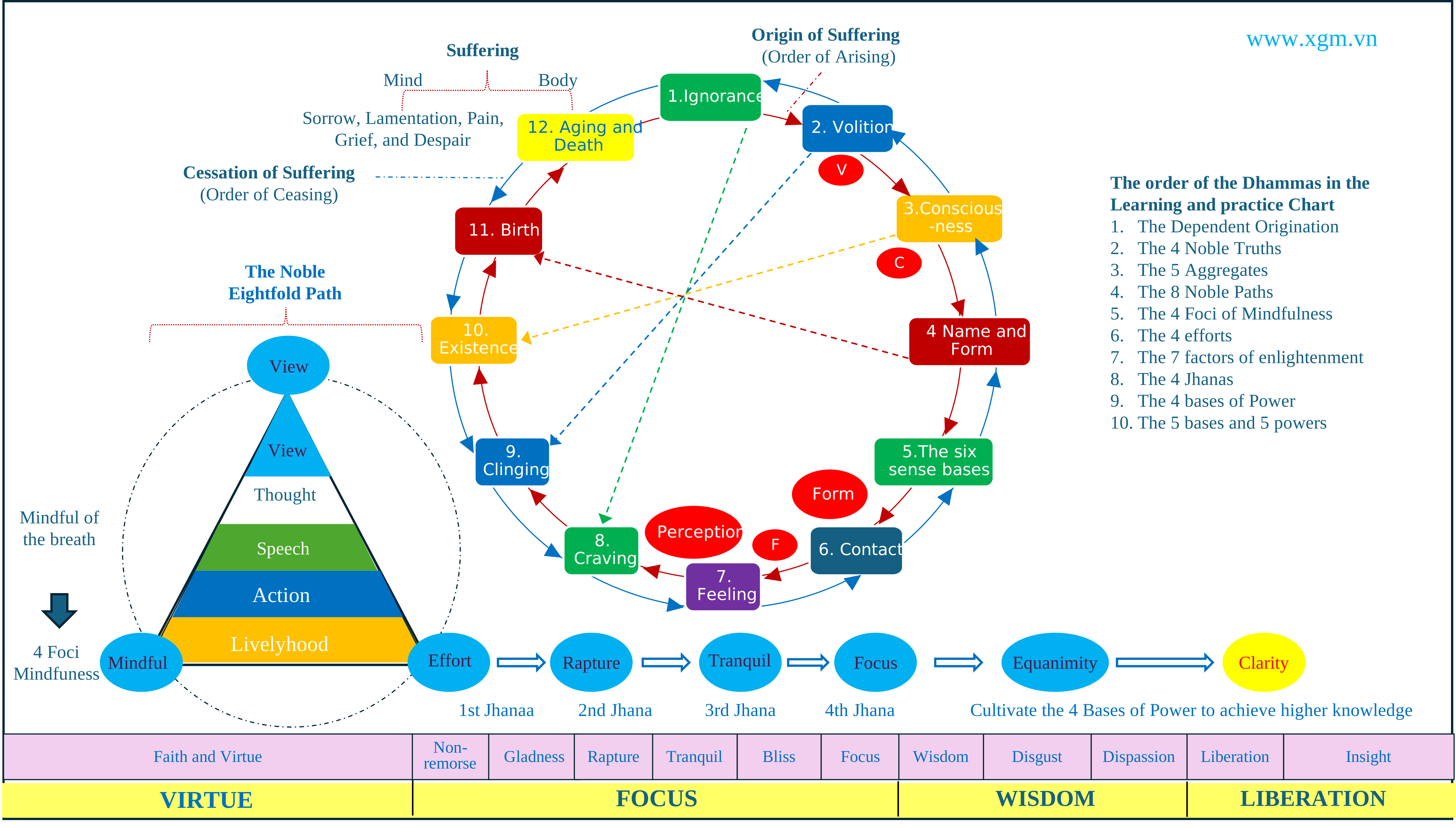
GUIDE OF THE DIAGRAM
- Full Comprehension of the Core Dhammas (Pariññā):
- The Principle of Dependent Origination (Paṭiccasamuppāda): The practitioner needs to constantly contemplate in order to see and know things as they really are, without a grain of doubt regarding the 12 links in both their forward order (the cycle of Suffering and its Origin) and reverse order (the cycle of the Cessation of Suffering). Through this profound contemplation, the practitioner will thoroughly comprehend the Four Noble Truths: Suffering (Dukkha), its Origin (Samudaya), its Cessation (Nirodha), and the Path (Magga).
- The Five Aggregates of Clinging (Pañcupādānakkhandhā): The practitioner must contemplate and fully comprehend the Five Aggregates of Clinging (Form, Feeling, Perception, Volitional Formations, and Consciousness), which serve as the breeding ground for identity view (sakkāya-diṭṭhi)—the delusion that “this is mine, this I am, this is my self.” In the flowchart, the five aggregates are integrated directly into the specific links of Dependent Origination (such as Name-and-Form, Feeling, Perception, Volitions, and Consciousness) so that the practitioner can mindfully observe, track, and subdue the mind during meditation.
- Full Fulfillment of the 37 Factors of Enlightenment (Bodhipakkhiyadhamma):
- The Noble Eightfold Path (Ariya Aṭṭhaṅgika Magga): This path leads to the absolute purification of Body, Speech, and Mind. Within it, Right Concentration (Sammā-samādhi, or one-pointedness of mind) is supported and developed by the other seven factors. Among those, three specific factors—Right View, Right Effort, and Right Mindfulness—constantly revolve to support and govern the remaining aspects: Mind (via Right Intention), Speech (via Right Speech), Body (via Right Action), and Livelihood (via Right Livelihood). This systemic structure is visually illustrated by the three rotating circles at the vertices of the triangle in the diagram.
- Mindfulness of Breathing (Anāpānasati): The practitioner first restrains themselves through the cultivation of Virtue and the Noble Eightfold Path to weaken gross defilements, establishing stable mindfulness and concentration. Next, the practitioner transitions to the practice of Mindfulness of Breathing (indicated by the arrow pointing to the left side of the triangle). This practice arouses and fully develops the Seven Factors of Enlightenment (Satta Bojjhaṅgā)—from Mindfulness, Investigation of States, Energy, Joy, Tranquility, Concentration, to Equanimity—culminating in the perfection of True Knowledge and Liberation (Vijjā-vimutti).
- The Stages of Progress: Throughout the practice, the practitioner can self-verify their spiritual growth along the horizontal axis of 11 progressive stages (derived from the Nikāyas, such as the Ratha-vinīta Sutta), beginning from ‘Faith and Virtue’ and culminating in ‘Knowledge and Vision of Liberation’.
- Virtue, Focus, and Wisdom (Sīla – Samādhi – Paññā): The foundation at the very bottom of the chart signifies the all-encompassing principle of training, serving as the solid bedrock that supports and elevates the entire path toward enlightenment and liberation.
The interrelation of Dhammas (Phenomena)
Form
Rūpa dhamma
Material foods
sensual desire
Virtue
Emptiness
Feeling
Vedanā dhamma
Food of contact
Sensual lust
Focus
Emptiness
Perception
Saññā dhamma
Food of contact
Delight lust
Focus
Emptiness
Volition
Saṅkhāra dhamma
Food of volition
Craving
Insight
Siglessness
Consciousness
Viññāṇa dhamma
Food of congition
Clinging
Insight
Wishlessness
- Form (Rūpa-dhamma): Cultivated through Seclusion (Viveka) applied to Material Food (kabaḷīkārāhāra) –> Leading to the eradication of sensual desire (kāmacchanda) through the door of Emptiness Liberation (suññatā-vimokkha).
- Feeling (Vedanā-dhamma): Cultivated through Dispassion (Virāga) applied to Food of Contact (phassāhāra) –> Leading to the fading away of sensual lust (kāmarāga) through the door of Emptiness Liberation (suññatā-vimokkha).
- Perception (Saññā-dhamma): Cultivated through Disenchantment (Nibbidā) applied to Food of Contact (phassāhāra) –> Correcting distorted perceptions (vipallāsa-saññā) and ending delight and lust (nandirāga) through the door of Emptiness Liberation (suññatā-vimokkha).
- Volition (Saṅkhāra-dhamma): Cultivated through Cessation (Nirodha) applied to Food of Mental Volition (manosañcetanāhāra) –> Eradicating ignorance (avijjā) and craving (icchā-taṇhā) through the door of Signless Liberation (animitta-vimokkha).
- Consciousness (Viññāṇa-dhamma): Cultivated through Relinquishment (Vossagga) applied to Food of Consciousness (viññāṇāhāra) –> Eradicating underlying tendencies (anusaya) and ending craving for existence (bhavataṇhā) through the door of Wishless Liberation (appaṇihita-vimokkha), attaining the absolute cessation of rebirth (nirodha).
The Three Doors to Liberation (Emptiness, Signlessness, and Wishlessness) are presented and analyzed in detail on the Appendix page, Topic 14
Research Methods and References:
- Resources: Visit www.suttacentral.net to view the original Pali text alongside multi-language translations, including the Vietnamese version by Ven. Thích Minh Châu, the English version by Ven. Bhikkhu Bodhi and other modern languages.
- Search Method: Use AI to search for keywords and request direct links to SuttaCentral.
- Clarifying Meaning: Cross-reference with English translations or use AI tools to translate directly from Pali terms for a multi-dimensional perspective.
Seek refuge in yourself, not anyone else.
Always follow the truth, never the dogma